In the presence of the Malian Minister of Foreign Affairs and International Cooperation, Abdoulaye Diop, the head of Minusma, El-Ghassim Wane, presented the latest quarterly report of the UN Secretary General on the situation in Mali. This was on Tuesday 18 October 2022 at the Security Council meeting. The report under review covers the period from 3 June to 19 September 2022.
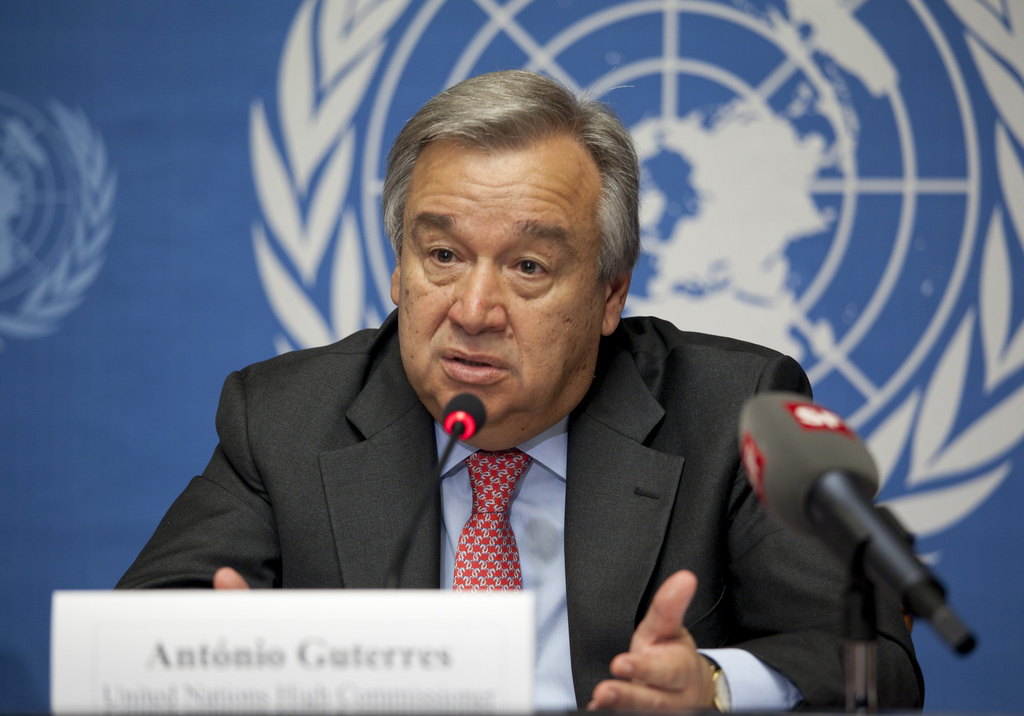
In this report, the UN Secretary General emphasises that the period under review was characterised by significant political progress in relation to the strategic priorities of UNMIS. For Antonio Guterres, the agreement between the Malian authorities and ECOWAS on the extension of the transition period has led to the partial lifting of the sanctions imposed on Mali and has revitalised the reform process.
Peace process welcomed by the UN
Since August, there have been encouraging developments in peace process, the UN Secretary-General noted. This refers to the holding of the high-level decision-making meeting which resulted in a consensus between the parties on the main outstanding aspects of the process. According to him, the Malian parties have agreed to integrate 26,000 ex-combatants into the Defence and Security Forces and the public administration. He also referred to the government’s adoption of the strategy for stabilising the central regions.
Political transition on track
Regarding the political transition, Guterres noted, among other advances, the timetable for the transition, the presidential decree creating a commission to draw up a preliminary draft constitution, the adoption of the electoral law and its dissemination with the support of Minusma in the 19 regions and the District of Bamako, and the meeting of the national consultation framework on electoral reforms and processes. But also the creation and launch of a Commission to monitor the timetable for political and institutional reforms, the holding of the 3rd meeting of the Transition Support and Monitoring Group on 6 September in Lomé, Togo.
In addition, the UN boss recalled the adoption on 15 June of the Strategic Framework for Rebuilding the State and its action plan, the appointment on 22 August of Colonel Abdoulaye Maïga as interim Prime Minister. Speaking of the stabilisation and restoration of state authority in the Centre, he reported that on 31 August, the presence of governors, prefects and sub-prefects in their places of assignment in Mopti and Ségou had reached 26% (29 out of 110 civil servants), compared with 19% at the end of April 2022.
Joint FAMa-MINUSMA patrols to combat insecurity
On the security front, the Secretary General notes the increase in the activities of extremist groups. He said that insecurity continued to spread to the west and south of the country where unidentified groups carried out attacks. In response, he said, Minusma has conducted several operations with an emphasis on enhanced cooperation with the Malian Defence and Security Forces, including joint protection activities as well as capacity building and provision of fuel to the reconstituted battalions in Timbuktu, Gao, Kidal and Menaka.
On 4 September, Guterres said, UN police conducted 175 joint patrols with Malian security forces, including 58 in the Mopti region.
In the Centre, he believes that three major factors explain the volatility of the security situation. First, the rainy season and the resulting operational constraints have undermined the ability of Malian forces to maintain security in the aftermath of military operations to clear areas of extremist groups.
According to Guterres, terrorist groups have exploited this loophole to impose survival pacts on communities, by which they enforce strict social and political norms, particularly in the northern Djenné Cercle, eastern Bandiagara, Bankass and Douentza.
Guterres presents a bleak picture of the human rights situation
In relation to the human rights situation, the UN boss states in his report that it continued to be characterised by allegations of abuses and violations of international humanitarian law perpetrated by extremist armed groups (297), self-defence militias (23), signatory armed groups (27) and unidentified armed elements (3).