It is a tradition since 1977 The 8th of March is the International Women’s Rights Day. This year’s 27th edition focuses on the theme “Equality Today for a Sustainable Future”. It is a day marked by numerous events and demonstrations throughout the world organised by movements and associations to celebrate the victories and achievements related to women’s rights, but also to make their demands heard in order to improve their situation.
Through this year’s theme, the UN Women’s organisation draws attention to the fact that without gender equality today, a sustainable future where equality prevails will remain out of reach. It is thus an invitation to recognise the contribution of women and girls around the world who are leading the way in adapting and responding to climate change and its mitigation in order to build a more sustainable future for everyone.
Historic progress in Africa
In Africa, there has been significant progress on gender issues. Indeed, through the celebration of International Women’s Day, the fundamental right of women and men to participate in political life is recognised at the international and national levels. Thus, the image of the African woman as an immovable pillar of her community is an archetype that transcends national boundaries.
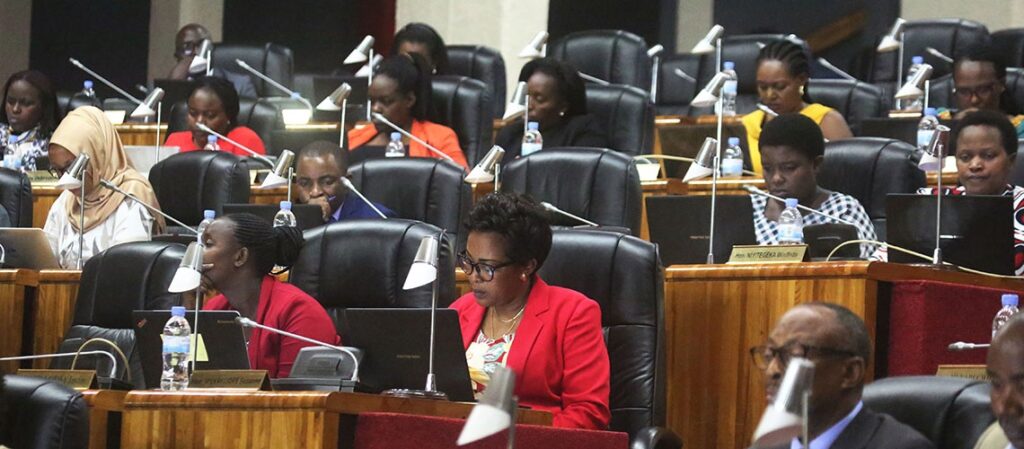
According to the Inter-Parliamentary Union, in the 75 legislative assemblies on the continent, there are 16 women at the top. The sub-Saharan region is now second only to Europe, which has 17 women presidents of parliament out of 70 legislative bodies. This is in stark contrast to Asia, which has eight, and the Middle East and North Africa region, which has only one. Thus, it is noted that Africa is also at the forefront of gender equality in the private sector, with notable female representation on boards.
The gender gap continues
However, despite this progress, much remains to be done. Structural barriers still prevent women from entering politics and holding more prestigious positions. While several African countries favour the presence of more women in parliament, others such as the Central African Republic and Benin are still lagging behind. And within assemblies themselves, women are often confined to what are considered ‘soft’ committees, such as social affairs, family and education, as opposed to ‘hard’ committees, which are seen as more powerful and influential, such as finance and defence.
One way to increase the likelihood that women will be able to hold such positions is through education from an early age. Involving adult boys and men in the promotion of gender equality is therefore an essential lever for fighting social norms and strengthening women’s capacity to act and make themselves heard.
Moreover, according to the United Nations, 70% of the 1.3 billion people living in poverty are women. In urban areas, 40% of the poorest households are headed by women.
In terms of agriculture, women are the main producers of food in the world (50-80%), but own less than 10% of the land. The organisation also reports that 80% of people displaced by climate-related disasters and changes are women and girls. As a result, climate change may lead to more gender-based violence, an increase in child marriage, and a worsening of sexual and reproductive health problems.
Although the celebration of the 8th of March has helped to change mentalities, in practice there is still a gap between equality in the exercise of power and in decision-making. The available data reflect, on the whole, only a token improvement and show that the overall goal of gender balance is far from being achieved.