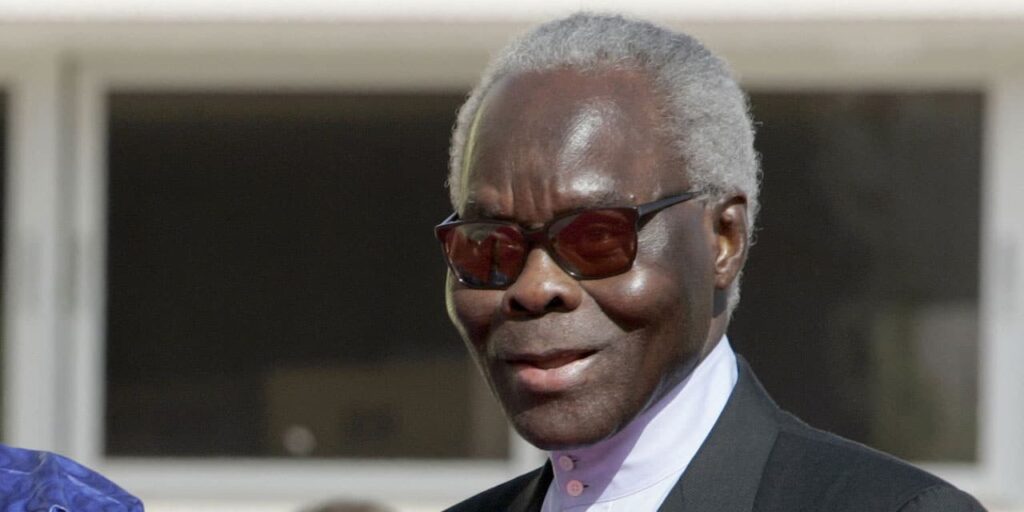
Fifty years ago this Wednesday, October 26, 2022, the former president, the late Mathieu Kérékou took power after his successful coup in 1972. This coup ended the three-headed management of the government by Justin Ahomadégbé, Hubert Maga and Migan Apithy.
According to several sources, it was 2.30 p.m. on Thursday 26 October 1972, when a group of soldiers composed of Commander Mathieu Kérékou, Captains Janvier Assogba, Michel Ayikpé and other army officers, deposed the presidential council headed by Justin Ahomadégbé. The latter had taken over from Hubert Maga a few months earlier. He should then return it to Sourou Migan Apithy, two years later. Thus, the three were able to concentrate power in their midst by setting up an alternative two-year system where each would taste the supreme prestiges.
The leader and commander Mathieu Kérékou gives the reasons for the putsch
The coup plotters wasted no time in formalising the military takeover. In the afternoon of 26 October, they took over the national radio station and the Palace of the Republic. At 3pm, Mathieu Kérékou’s voice resounds on the national radio as a representative of the new regime.
In a long speech, he justifies this power grab by the failings of the presidential council. Kérékou and his peers deplored the ‘undemocratic elections’ of 1970 because of the ‘violence, pressure and fraud’ that occurred. This forced the military board to cancel both elections. The coup plotters also regret the divisions within the Presidential Council and its inaction in the face of the situation.
The soldiers pointed out that the council shows, every day, “the distressing spectacle of its congenital deficiency, its notorious incapacity and its unforgivable incompetence to manage the affairs of the state and to lead the Dahomean people with dignity towards a better tomorrow. The situation at the top of the state had also caused, according to them, “injustice and arbitrariness” in the country, and “the virus of division has reached the army”.
In view of all these observations, the coup plotters then declared the dissolution of the presidential council, the government, the National Consultative Assembly and the departmental and urban authorities in place. Subsequently, they announced that the army would henceforth assume the full powers of the state. The putschists unanimously decided to entrust the management of the country to Mathieu Kérékou, who was seen as a charismatic leader.
From the revolution to the era of democratic renewal
The newly elected president came to power with an ambitious programme speech. “The branch will not break in the arms of the chameleon. Dahomey will be commanded and directed wisely by a revolutionary military regime,” he said to show his determination to keep the revolution going. Unfortunately, 17 years later, he was disappointed. The revolution finally gave way to democratic renewal in 1990.
Some key dates on Mathieu Kérékou
- Born on 2 September 1933 in Kouarfa, in the colony of Dahomey (Benin)
- President of the Republic of Dahomey (26 October 1972 – 30 November 1975)
- President of the People’s Republic of Benin (30 November 1975 – 4 April 1991)
- President of the Republic of Benin (4 April 1996 – 6 April 2006)
- Died on 14 October 2015 in Cotonou, Benin.
In Benin, the late General Mathieu Kérékou is recognised and honoured as a great peacemaker. Several buildings bear his name in Cotonou, such as the Stade de l’amitié (Friendship Stadium) named Stade Général Mathieu Kérékou and the Gardens of Mathieu erected in his honour.