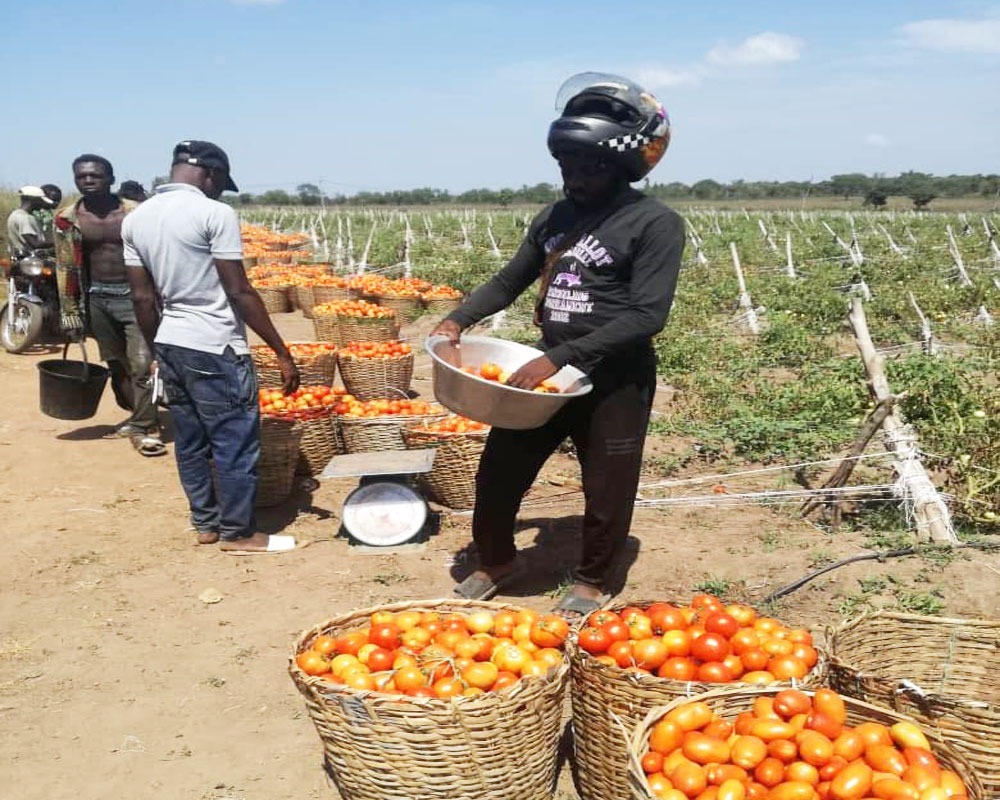
In Africa, more than half of those living on the continent depend on agriculture for their subsistence. Still, a significant number of people suffer from malnutrition with an extremely high rate compared to the rest of the world. Agriculture is of paramount importance to underdeveloped countries because, firstly, a well-functioning agricultural sector is essential to ensure food security and, secondly, agricultural production is a major source of income.
About 0.2% of Africa’s agricultural land is farmed organically, partly because little is known about how organic products are produced, processed and marketed. In such a situation, can organic agriculture feed Africa? Food security is reached when everyone, at any time, has economic and physical access to sufficient, safe, and nutritious food to meet their dietary needs and food preferences for an active and healthy life.
The challenge in promoting organic agriculture is to foster systems of food production that ensure food security while respecting the environmental limits of the land. As the global organic market is changing and growing, African farmers could well seize the opportunity to increase their production and at the same time, boost their turnover. Often close to traditional production methods, organic farming contributes to soil preservation and allows populations to benefit from sustainable resources in a context where demographic pressure is very strong.
An agriculture with many advantages.
Beyond preserving the land, the development of organic agriculture would eventually allow local populations to obtain better compensation for their work. Because this type of agriculture offers better margins than standard products. The demand for organic products in European countries is growing rapidly. African export-oriented producers could significantly improve the productivity of their farms by converting their land to organic. Highly labor-intensive, it can also be a source of employment for young people in rural areas.
In addition, it improves the resilience of agricultural systems, reduces negative impacts on the environment, on the health of producers and consumers. These specific techniques can, under certain conditions, increase agricultural productivity even if the yields are, for the time being, on average lower than those of conventional agriculture.
Organic in the African context
Sometimes we think that it is utopian to speak of organic agriculture in an environment where feeding the population is still a major challenge in some African countries. However, this option is possible. Indeed, refute this possibility would be admitting willingly that fertilizers, pesticides and genetically modified organisms (GMOs) are indispensable to feed the planet. Such a conception does not necessarily benefit Africa, because instead of using chemical fertilizers, the African farmer can use organic fertilizers that improve farm-scale fertility. Rather than using pesticides, agro-ecology proposes pest control; instead of using only the rainy season to produce, massive irrigation can promote full time production.
Even if modern agricultural methods help boost yields and thus ensure food security, the deterioration of plant cover and soil, the destruction of the ecosystem that they cause in the African context are not beneficial to human health or the environment. In addition, producing organic food means regaining pride in producing healthy food and being recognized by consumers.
Organic agriculture may be a good option to ensure food security in Africa. Even if it does not currently yield more than conventional agriculture, it is better than most conventional systems and certainly more sustainable in the long term. Should we then promote “healthy diet”, without chemical products or “eating a lot” in an African context where access to quality health care for the population is still a headache for leaders? And yet, producing enough food is far from food security.
french translation of ” Agriculture biologique : Un levier pour la sécurité alimentaire en Afrique ? ”, Eliane Fatchina, by Salima ALAGBE